
English| EUR
Suggested for you
More currencies
Choose a language
Mount Triglav's summit sits 2,864 meters above the Julian Alps, accessible only by steep, exposed routes that demand stamina and good weather. The climb spans anywhere from a single long day to a multi-day expedition depending on your starting valley, fitness level, and whether you overnight in a mountain hut. This guide breaks down the timing for each approach so you can plan the safest, most realistic ascent.
Quick answer
How long does it take to climb Triglav depends on your route and pace, but most climbers take 8 to 12 hours for a single-day ascent from valleys like Pokljuka or Krma, or split the climb across two days with an overnight stay at a mountain hut. The most popular two-day approach via Kredarica Hut requires 4 to 6 hours from the trailhead to the hut, then another 1.5 to 2 hours to the summit the next morning, plus descent time.
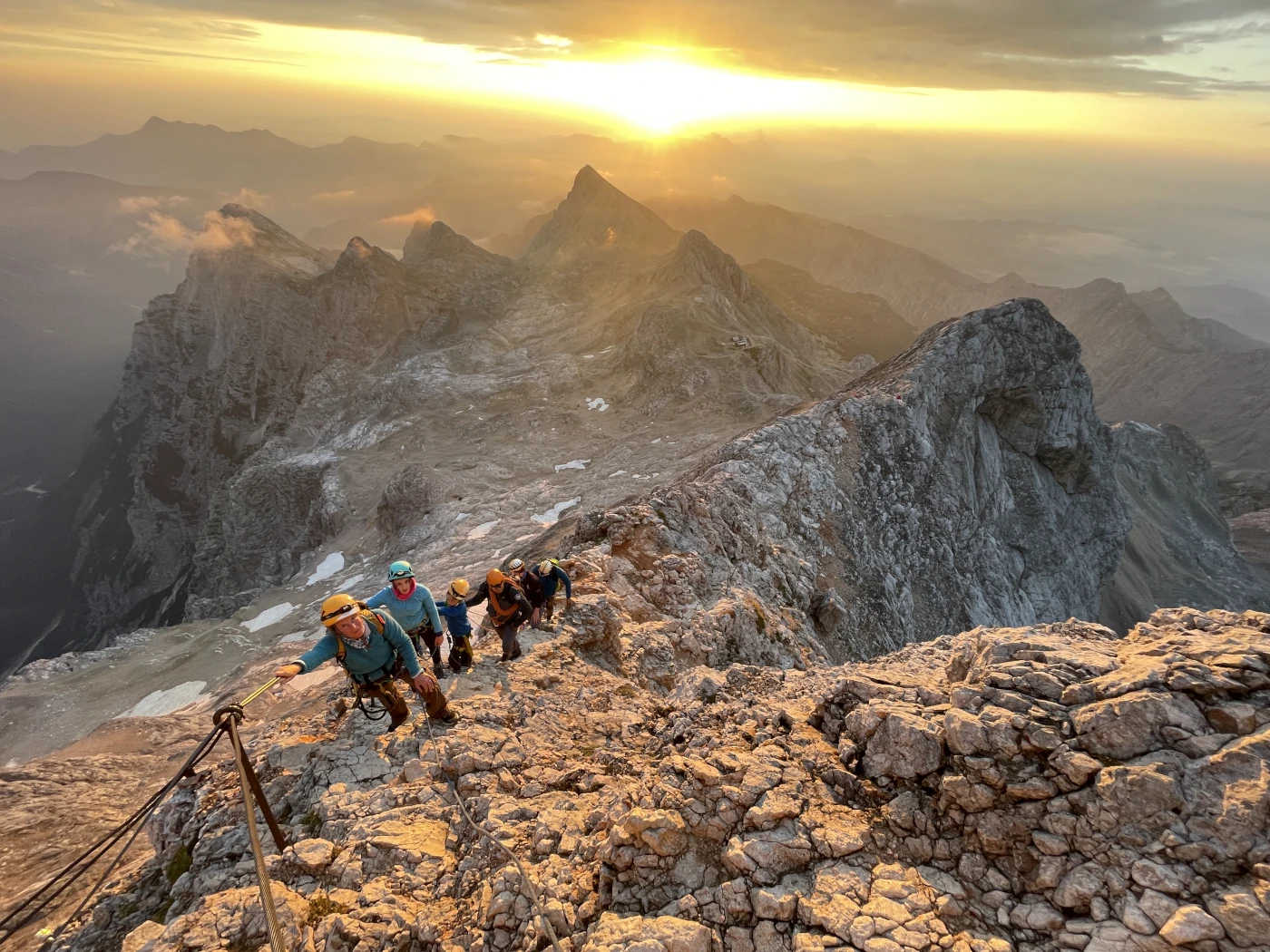
Triglav's summit lies at the center of Slovenia's only national park, reachable by a dozen named routes that wind through limestone walls, scree couloirs, and forested valleys. Unlike peaks with cable cars or service roads, every meter of elevation here is earned on foot, and the final approach requires scrambling on fixed steel cables that have been bolted into the rock since the early 20th century. The duration of your Triglav climb hinges on three variables: trailhead elevation, route difficulty, and whether you carry overnight gear or book a hut bunk. The shortest valley approach starts at Rudno Polje on the Pokljuka plateau, cutting the total elevation gain to around 1,600 meters, while longer routes from Lake Bohinj or the Vrata Valley add an extra 1,000 meters and two to three hours each way. Weather compounds every estimate—afternoon thunderstorms force most climbers to start before dawn, and late-season snow on the north face can double the time required for safe passage. Most first-time climbers choose the two-day schedule, sleeping at Kredarica or Triglavski Dom and summiting in the morning when the rock is dry and visibility extends across the Adriatic. Single-day ascents demand alpine fitness and an early alarm, typically beginning between midnight and 3 a.m. to ensure descent before storms build. The summit register, housed in a steel cylinder atop the Aljaž Tower, logs thousands of names each summer, but the mountain's exposure and altitude mean how long does it take to climb Triglav is as much about conditions as conditioning. Triglav National Park enforces no permit system and charges no summit fee, but mountain huts require advance booking during July and August, when beds fill weeks ahead. The descent retraces your ascent route unless you arrange a shuttle between trailheads, and the final valley stretch—often neglected in planning—adds another hour when legs are already spent and daylight is fading.
“Every meter of elevation on Triglav is earned on foot, and the final approach requires scrambling on fixed steel cables bolted into the limestone since the early 20th century.”
Most climbers tackle Triglav as a two-day expedition, overnighting in a mountain hut to split the demanding ascent and avoid exhaustion on the exposed summit ridge. This plan follows the popular Pokljuka Plateau approach via the Planika hut.
Begin from the Rudno Polje parking area and hike 4–5 hours through forest and alpine meadows to Planika hut at 2,401 meters. Book your bunk weeks in advance during summer.
Arrive at the hut by early afternoon, claim your sleeping spot, and let your body adjust to the altitude. Dinner is served communally around 18:00.
Wake at 04:00 and leave the hut by 05:00 to reach the summit before crowds and afternoon storms build. Carry a headlamp for the pre-dawn start.
Pass the Kredarica hut and continue onto the final summit ridge, where steel cables and iron pegs aid the scramble. The exposure is significant—stay focused and move deliberately.
Reach the highest point in Slovenia after 2–3 hours from Planika. Sign the summit register, then begin your descent immediately to avoid weather.
Retrace your route to Planika for a quick meal, then continue down to the parking area. Total descent takes 3–4 hours depending on pace and trail traffic.
The climb demands advance logistics and proper mountain gear to match the 2–3 day timeline.
Climbing Mount Triglav does not require an entrance fee or specific climbing permits. The mountain is located within Triglav National Park, which provides free access to all visitors.
Verdict: An adult pays 0 EUR for park entry, though expenses for mountain hut accommodation or guided services remain dependent on personal choices.
Triglav National Park is accessible 24 hours a day, allowing climbers flexibility when planning their ascent to the summit.
Everything you need to know about how long does it take to climb triglav
Determining how long does it take to climb Triglav depends on your fitness level and chosen route, but most hikers require two days to complete the journey safely. It is important to account for weather conditions when planning how long does it take to climb Triglav to ensure a secure ascent.
There is 0 EUR entrance fee for the National Park. You can enjoy the trails without worrying about ticket costs as it is a public space.
You should aim to arrive between 00:00–08:00 to avoid afternoon storms and heavy peak-hour crowds on the summit ridge. This early start window is crucial for a safe mountaineering experience.
No permit is required for climbing this mountain. You are free to access the trails throughout the National Park.
Hiking with children requires careful planning regarding stamina and technical difficulty, which influences how long does it take to climb Triglav for your family group. We recommend consulting with experienced guides to assess if your route is suitable for younger climbers.
To avoid weather risks, the best arrival window is between 00:00–08:00. Starting during this time helps you avoid the common afternoon storms that affect the summit.
While athletic individuals may move faster, the typical duration for how long does it take to climb Triglav remains a two-day commitment for the majority of visitors. This timeframe allows for proper acclimatization and navigation through the limestone terrain.
The park is open every day, Monday through Sunday, from 00:00–23:59. You have constant access to the trails, provided you follow safety guidelines.